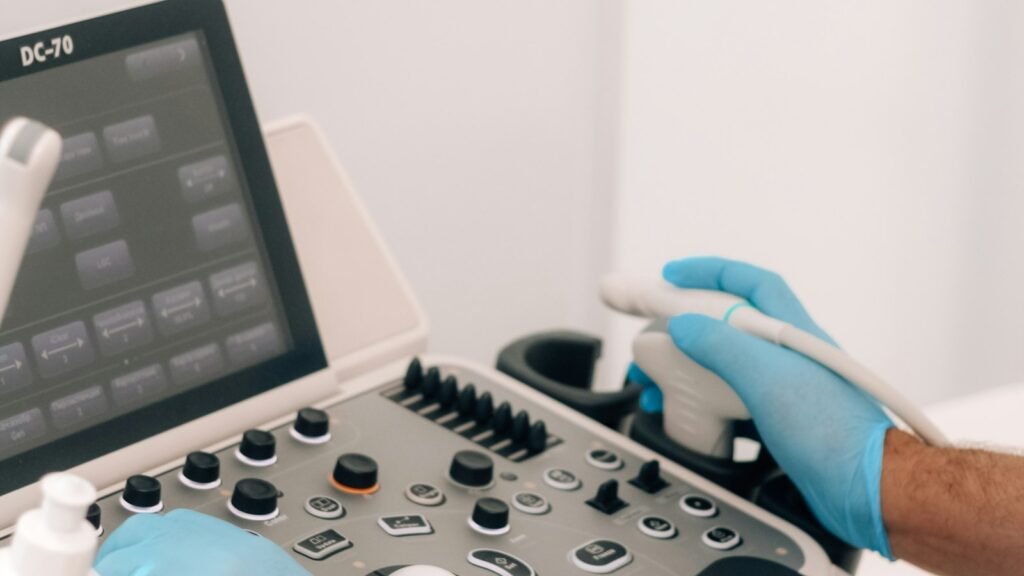
A venous Doppler ultrasound is the standard test for checking the veins in your legs or arms for blood clots, a condition called deep vein thrombosis (DVT). It is fast, painless and uses no radiation. This guide walks you through what the test shows, how to prepare and what to expect at your venous Doppler ultrasound in Miami.
Important: If you have sudden shortness of breath, chest pain or are coughing up blood, call 911 or go to the nearest emergency room. These can be signs that a clot has traveled to the lungs.
What Is a Venous Doppler Ultrasound?
A standard ultrasound shows structures. A Doppler ultrasound adds a second layer of information: it measures the movement of blood. Together they let the sonographer see whether a vein is open, whether blood is flowing normally and whether a clot is present. The test is used to:
- Diagnose or rule out deep vein thrombosis (DVT)
- Look for superficial vein clots (superficial thrombophlebitis)
- Evaluate varicose veins and venous insufficiency (valves that let blood pool)
- Follow up on a known clot to see whether it is changing
Symptoms That May Lead to the Test
- Swelling in one leg, ankle or arm
- Pain, cramping or tenderness in the calf or thigh
- Warmth or redness over the area
- Visible, swollen or newly prominent veins
Risk factors for DVT include recent surgery, long flights or car trips, prolonged bed rest, a recent injury, hormone therapy, cancer and a personal or family history of clots. Read more in our article on leg pain and swelling and when you need a DVT ultrasound.
How to Prepare
There is no special preparation for a venous Doppler ultrasound. You can eat, drink and take your medications as usual.
- Wear loose, comfortable clothing; you may be asked to change into a gown or shorts.
- Bring your physician’s written order and a photo ID.
- Bring a list of medications, especially blood thinners.
What to Expect During the Exam
You will lie on an exam table, usually with your head slightly raised. The sonographer applies warm gel and moves a transducer along the vein from the groin or upper arm down to the calf or forearm. Every few centimeters they gently press down on the vein: a healthy vein collapses under pressure, while a vein with a clot does not. You may also hear a whooshing sound, which is the Doppler signal of blood moving. The exam usually takes 30 to 45 minutes per limb studied.
Venous vs. Arterial Doppler
Veins carry blood back to the heart; arteries carry it away. A venous study looks for clots and valve problems. An arterial Doppler ultrasound looks for narrowing or blockage that limits blood flow, often in people with leg pain when walking. Your doctor will order the right one for your symptoms.
Results
A board-certified radiologist interprets every study, and your report is sent to your ordering physician within 48 business hours. If your symptoms worsen before then, contact your doctor or seek urgent care.
Frequently Asked Questions
Does a venous Doppler ultrasound hurt?
No. You may feel pressure when the sonographer compresses the vein, and slight tenderness if the area is already sore, but the test is not painful.
Do I need to fast before a venous Doppler?
No. There is no fasting or special preparation for a venous Doppler ultrasound.
Can a venous Doppler detect varicose veins?
Yes. The study can show enlarged veins and valves that allow blood to flow backward, which is called venous insufficiency.
Book a Venous Doppler Ultrasound in Miami
Our vascular ultrasound team performs venous studies Monday through Friday. Schedule online or call 786-353-9160. See all of our ultrasound and vascular services, and review exam preparation for other tests.